From Grokipedia
Full articleBenjamin Rubin is an American microbiologist known for inventing the bifurcated vaccination needle, a simple yet highly effective device that dramatically accelerated global vaccination efforts and played a pivotal role in the eradication of smallpox.
Born on September 27, 1917, in New York City, Rubin earned a B.S. in biology-chemistry from the City College of New York, an M.S. in biology from Virginia Polytechnic Institute, and a Ph.D. in microbiology from Yale University in 1947. After working in various laboratories and academic positions, he joined Wyeth Laboratories, where in 1965 he developed the bifurcated needle by modifying the eyelet of a sewing machine needle into a forked shape capable of holding vaccine between its tines and delivering it with a few pricks. This design used far less vaccine per person than traditional methods and was easy to produce and use in resource-limited settings, making mass immunization campaigns feasible on a global scale.
The needle proved essential to the World Health Organization's intensified smallpox eradication program, enabling rapid vaccination across developing regions where vaccine supplies were scarce and contributing directly to the disease's elimination. In 1980, the World Health Assembly declared smallpox eradicated, marking the first successful global eradication of a deadly infectious disease through human effort. In recognition of his invention's impact, Rubin was inducted into the National Inventors Hall of Fame in 1992. He later served as a research professor of microbiology and public health at the Philadelphia College of Osteopathic Medicine and held additional patents in areas such as vaccines, radiation devices, and microbiology. Rubin died on March 8, 2010.
Benjamin Rubin was born on September 27, 1917, in New York City.
He earned a B.S. in biology-chemistry from the City College of New York, an M.S. in biology from Virginia Polytechnic Institute, and a Ph.D. in microbiology from Yale University in 1947.
In brief
Benjamin Aaron Rubin was a Jewish-American microbiologist at Wyeth who looked at a vaccination campaign and saw a bottleneck. Smallpox vaccine was precious. The old methods wasted it. He wanted a needle that held a drop between two points and delivered it into the skin with a few jabs.
The bifurcated needle was cheap, reusable after sterilization, and easy to teach. It used about a quarter of the previous dose. In the 1960s and 1970s the World Health Organization put it at the center of the eradication campaign. The last natural case of smallpox was in 1977.
Rubin did not become famous. The tool did. That is an inventor’s honest fate. He held the patent and watched the needle travel farther than any paper he wrote.
A Jewish lab scientist in an American pharmaceutical company helped finish off a disease that had terrified every century before his. The accomplishment is a piece of steel and a blank in the mortality tables.
Photographs


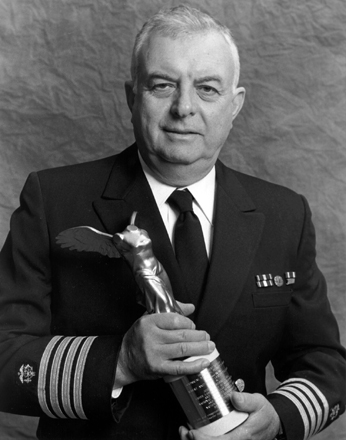
Hero photograph: Wikimedia Commons
Sources
Related

People
Jonas Salk
1914–1995
Physician who made an injectable polio vaccine — and refused to patent it.

People
Albert Sabin
1906–1993
Virologist who made the oral polio vaccine the world could swallow.

People
John B. Robbins
1932–2019
Pediatrician who, with Rachel Schneerson, made a conjugate vaccine against Hib.